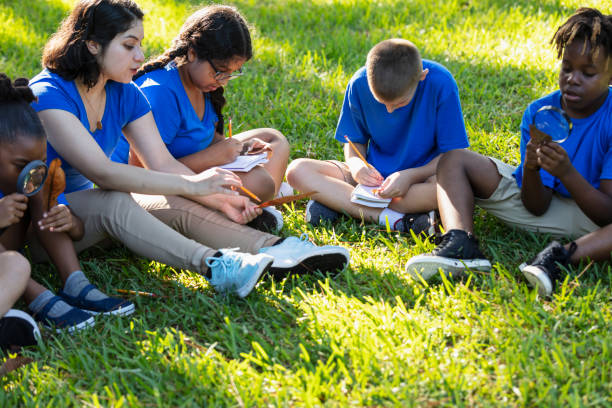
When most people think about learning, the image that pops into mind is usually a classroom: rows of desks, a teacher at the front, textbooks stacked high. But the truth is, the most impactful skills we develop often happen outside those four walls. Sure, classroom learning gives you theory, a foundation, and a way to pass exams—but it’s the experiences beyond that structure that truly shape who we become, both personally and professionally.
The Power of Experiential Learning
Experiential learning—basically, learning by doing—is the cornerstone of real-world skill development. For example, volunteering at a community center doesn’t just build empathy; it also hones communication, problem-solving, and leadership skills. Unlike a lecture where you passively absorb information, engaging in real-life scenarios forces you to think critically, adapt, and act decisively.
Take entrepreneurship as another example. Reading a business textbook might teach you about supply chains or marketing strategies, but starting even a tiny venture—like selling homemade crafts or tutoring—teaches you risk management, customer relations, and financial planning in ways a classroom never could. The successes and failures you experience firsthand are lessons that stick for life.
Communication: More Than Just Words
One of the most underrated skills we gain outside school is communication. Sure, English or language classes teach grammar and vocabulary, but real communication involves negotiation, persuasion, empathy, and listening—things that formal education rarely emphasizes.
Think about group projects, part-time jobs, or even organizing an event for your local club. These experiences push you to coordinate with others, manage conflicts, and convey ideas clearly. These are the skills that employers consistently rank as critical. A person with a brilliant technical skill but poor communication often struggles, while someone who can effectively articulate ideas, even with moderate technical expertise, tends to excel.
Problem-Solving in the Wild
Classrooms give you problem sets and theoretical scenarios, but life outside school is messier. You might have to figure out how to manage a tight budget, repair something that broke at home, or plan a trip with friends under time constraints. These situations teach resilience, creative thinking, and adaptability.
For instance, working on a community project might throw unexpected obstacles your way—a vendor cancels, a volunteer doesn’t show up, or the weather turns against your outdoor plan. Navigating these challenges cultivates resourcefulness. The difference is subtle but powerful: textbooks give you the “solution,” but real-life situations force you to innovate solutions.
Emotional Intelligence Matters
Emotional intelligence (EI) is another skill rarely taught in classrooms but deeply developed through life experiences. EI is about understanding your own emotions, empathizing with others, and managing relationships effectively. Working part-time, volunteering, traveling, or even participating in sports all help build EI.
Consider teamwork in sports: you learn to motivate teammates, manage frustration, and celebrate collective victories. In part-time work, you encounter diverse personalities and learn patience, negotiation, and diplomacy. Emotional intelligence is what separates a competent professional from an exceptional one. And most of it comes from doing—not reading.
Digital Literacy and Tech Skills
In today’s world, digital literacy is practically a life skill, and many of us acquire it outside school. Whether it’s learning to code from YouTube tutorials, managing social media for a club, or designing graphics for a small business, these experiences teach hands-on skills that are immediately applicable.
Even more important than mastering specific software is understanding how to adapt to new technologies quickly. Classrooms often struggle to keep pace with rapidly evolving tools, but self-directed projects and hobbies force you to learn on the fly—a skill that employers highly value.
Networking and Social Capital
One of the less obvious benefits of learning outside the classroom is networking. Every event, internship, or collaborative project is an opportunity to meet new people, gain mentors, and build relationships that can last a lifetime. These connections often open doors to opportunities far beyond what classroom achievements alone can offer.
Think of it like a web: the more real-world interactions you have, the wider your network grows. Networking isn’t just about job hunting—it’s also about learning from others, gaining different perspectives, and being exposed to ideas and challenges you might never encounter in school.
The Role of Curiosity and Self-Directed Learning
Perhaps the most crucial skill we develop outside formal education is the ability to learn independently. Curiosity drives us to explore subjects, skills, or hobbies that aren’t part of a syllabus. Whether it’s learning a new language, experimenting with photography, or mastering a musical instrument, self-directed learning fosters discipline, motivation, and problem-solving.
This type of learning is often more meaningful because it’s driven by genuine interest. Unlike cramming for exams, these skills stick because we’re invested. In a rapidly changing world, the ability to teach yourself is more valuable than memorizing facts that may become obsolete.
Bridging Classroom Knowledge with Real-World Skills
Of course, classroom learning isn’t irrelevant—it provides the knowledge framework on which real-world skills can be built. The key is balance. For example, understanding physics principles in school allows a hobbyist to tinker with robotics more effectively. Learning financial theory makes budgeting experiments or starting a small business more structured and successful.
The ideal approach is to treat formal education as a foundation and supplement it with practical experiences that build transferable skills. This combination makes you not only knowledgeable but also capable, adaptable, and ready to tackle complex challenges.
Conclusion: Skills That Stick
In the end, real skills are learned in real situations. Communication, problem-solving, emotional intelligence, technical adaptability, networking, and self-directed learning are all cultivated outside traditional classrooms. These are the abilities that matter in personal growth, career success, and life satisfaction.
So next time you’re tempted to think that only grades and certificates define your capabilities, remember this: the world itself is a classroom, and every experience is a lesson. Dive in, take risks, and embrace the messy, unpredictable learning that comes from living fully—because those are the skills that truly stick.