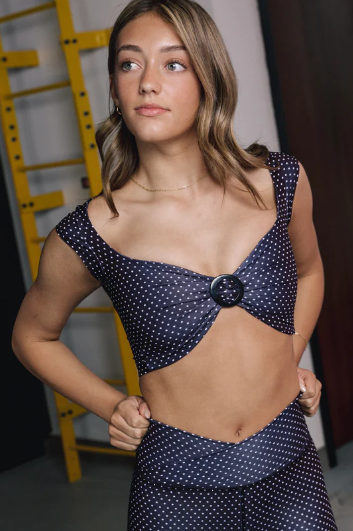
The dancewear market has evolved considerably over the past decade, and one piece in particular has moved from optional extra to studio staple across virtually every dance discipline. Whether you train in ballet, contemporary, jazz, hip-hop, or lyrical, the right top can directly affect how you move, how you feel, and how clearly a teacher can assess your alignment and technique during class. Dance crop tops have earned their central place in the modern dancer’s wardrobe not because of trend alone but because they deliver a genuinely functional combination of unrestricted movement, breathable construction, and expressive personal style that full-length alternatives often cannot match. Understanding what separates a well-made crop top from an ordinary one is the first step toward building a dancewear wardrobe that works as hard as the dancer wearing it.
Why Crop Tops Have Become a Studio Standard
There was a time when dance training attire followed a fairly rigid set of conventions: leotards, tights, and very little variation beyond color choice. That uniformity has shifted significantly in recent years, driven by evolving studio cultures and a broader understanding of how dancers develop and perform at every level. Crop tops entered the mainstream dance wardrobe because they address a specific and practical challenge: they allow instructors and dancers alike to observe the torso, core engagement, and shoulder alignment clearly during training, without the visual interruption that longer or looser tops can create.
For coaches and studio directors, this visibility is genuinely valuable. Proper spinal alignment, hip placement, and core activation are difficult to assess accurately when obscured by excess fabric. A well-fitted crop top keeps those key reference points visible and makes technique-focused teaching measurably more effective for both instructor and student.
Key Features That Separate Dancewear from Fashion
Not every crop top is designed with the demands of dance training in mind. When evaluating options for studio use, several features distinguish a high-performance dancewear piece from a general fashion garment.
Support and structure come first. Dance involves sudden directional changes, jumps, extensions, and turns that place real demands on every layer of clothing. A crop top built for training should provide adequate support or work seamlessly with a dance bralette underneath without shifting, bunching, or requiring mid-class adjustment.
Moisture management is equally important. High-intensity dance sessions generate heat quickly, and fabrics engineered to wick moisture away from the skin while maintaining breathability allow dancers to train longer with greater focus and comfort.
Stretch and recovery also matter significantly. Quality dancewear fabric must move freely in every direction to accommodate the full range of motion that dance demands, then return to its original shape without sagging or distorting over repeated use. Finally, a secure hem and well-designed silhouette prevent the constant readjustment that lesser-made tops require and allow dancers to remain fully focused on their movement.
Matching Your Crop Top to Your Dance Discipline
Different dance styles call for different considerations when selecting a crop top:
- Ballet and contemporary: Clean lines and minimal detailing are generally the standard. Soft, lightweight fabrics in neutral or classical tones tend to work best, though many contemporary companies now encourage individual expression within training attire.
- Jazz and lyrical: These disciplines benefit from tops with slightly more structure, as movements tend to be sharper and more dynamic. A fitted ribbed or compression-style fabric complements the expressiveness of these genres without restricting movement.
- Hip-hop and urban styles: This genre embraces a wider range of silhouettes and a stronger fashion-forward element. Oversized, asymmetric, or boldly printed crop tops all have a place here, provided they still allow complete freedom of movement throughout rehearsal.
- Cross-training and fitness: Dancers who incorporate strength work, pilates, or yoga alongside their studio training benefit from versatile crop tops that transition comfortably between disciplines without sacrificing performance in either setting.
How to Layer and Style Crop Tops Across Settings
Versatility is one of the most underappreciated qualities of a well-chosen crop top. Layered over a leotard for ballet class, worn with high-waisted leggings for a contemporary workshop, or paired with shorts for a hip-hop rehearsal, a single quality piece can adapt to multiple studio environments without effort. For cooler mornings or warmup sessions, a zip-front jacket or open-back layer worn over a crop top maintains warmth while preserving the movement advantages and aesthetic of the base garment. Building even a modest collection of crop tops in a range of versatile colors gives dancers the flexibility to coordinate across varied class contexts while expressing their individual style within whatever parameters their studio maintains.
Building a Crop Top Wardrobe That Works
Approaching dancewear as a genuine investment rather than a series of low-cost replacements saves both money and inconvenience over time. Higher-quality crop tops maintain their shape, color, and structural integrity through repeated washing and intensive training in a way that budget alternatives rarely achieve. Starting with two to three foundational pieces in neutral tones that work across multiple disciplines gives dancers maximum versatility, and adding bolder colors or printed styles from there allows a wardrobe to grow alongside the dancer’s individual aesthetic and studio commitments.
Dancewear Built for Dancers Who Train Seriously
From beginner students building their first studio wardrobe to advanced dancers and coaches curating performance-ready collections, the right crop top is a foundational training piece that earns its place in every dance bag. Tiger Friday designs dancewear specifically for dancers who take their craft seriously, with a range of crop tops built around the performance standards, fabric quality, and expressive style that modern training environments genuinely demand. Explore the full collection and find the pieces that move as well as you do.