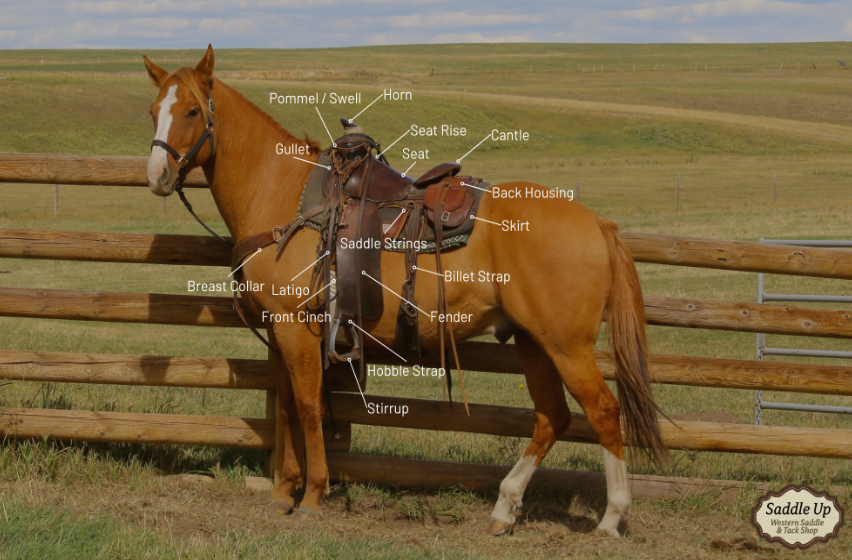
Western saddles may share a recognisable horn, deep seat, and broad skirt, but they are not all designed for the same purpose. Understanding the main types of western saddles helps riders compare features based on discipline, riding duration, horse conformation, and the level of security or freedom of movement required.
Why Western Saddles Differ
Western saddles developed around the practical demands of ranch work, livestock handling, long-distance riding, competition, and everyday horsemanship. Each activity places different demands on the saddle.
A roping saddle needs a strong tree and horn capable of handling pressure. A barrel racing saddle must help the rider remain secure while allowing the horse to turn quickly. A trail saddle should remain comfortable over several hours without adding unnecessary weight.
Differences may include:
- Seat depth and shape
- Horn height and thickness
- Cantle height
- Skirt length
- Saddle weight
- Rigging position
- Stirrup placement
- Tree width and bar angle
- Decorative details
- Space for carrying equipment
The intended discipline should guide the search, but fit for both horse and rider remains more important than the category name alone.
All-Around Western Saddles
An all-around saddle is designed for riders who take part in several activities rather than focusing on one specialised event. It may be used for pleasure riding, light ranch work, training, local shows, or general arena riding.
These saddles often balance rider security with enough freedom for the horse to move naturally. The seat is usually moderately deep, while the horn and rigging are sturdy enough for everyday use without the heavier build found in dedicated roping saddles.
An all-around design can be a sensible choice for newer riders who are still deciding which discipline they prefer. It may also suit owners who want one saddle for regular riding rather than several highly specialised models.
Trail and Pleasure Saddles
Trail saddles are made for riders who spend extended periods in the saddle. Comfort, weight, balance, and space for equipment are often major priorities.
Many trail saddles feature padded or shaped seats, flexible stirrup placement, and lighter construction. They may include strings, rings, or attachment points for water bottles, saddle bags, rain gear, and other trail supplies.
Shorter or rounded skirts can be useful for horses with shorter backs. Some trail saddles also use synthetic materials to reduce weight and simplify cleaning.
A comfortable seat is helpful, but horse fit should not be overlooked. A poorly fitted trail saddle can create pressure points during long rides, even when the rider finds the seat comfortable.
Ranch Saddles
Ranch saddles are built for long working days and a variety of ranch tasks. They tend to have strong trees, sturdy rigging, durable leather, and seats that support steady riding across rough ground.
The horn is usually strong enough for practical work, although exact construction depends on the saddle. Ranch saddles may also have larger skirts and heavier leather than trail or competition models.
Because these saddles are expected to withstand regular use, they are often heavier. The added weight may be acceptable for working riders who value durability, balance, and equipment-carrying capacity.
A ranch saddle may also work well for riders who prefer a traditional, substantial feel, even when they are not working cattle.
Roping Saddles
Roping saddles are designed for activities that place significant pressure on the horn and tree. They usually have a thick horn, reinforced construction, strong rigging, and a low, secure seat.
The tree must be sturdy because the saddle may absorb force when a rope is dallied around the horn. The horn and fork are typically larger than those found on many other Western saddles.
Roping saddles are generally heavier than trail, barrel, or show saddles. Their build can make them useful for ranch work, but they may feel bulky for riders who only need a saddle for pleasure riding.
A saddle should never be assumed suitable for roping based only on appearance. Riders should confirm that the tree, horn, rigging, and construction are intended for that level of stress.
Barrel Racing Saddles
Barrel saddles are designed to help horse and rider move quickly around tight turns. They commonly feature deep seats, high cantles, tall swells, and short skirts.
These elements help the rider remain centred during acceleration, sharp direction changes, and sudden stops. Shorter skirts may also allow closer contact and reduce interference with the horse’s movement.
Barrel saddles are usually lighter than roping or ranch saddles. The horn may be tall and narrow, giving the rider a place to steady the body during a turn.
Although the secure seat can feel comfortable for casual riding, the design is primarily shaped around speed events. Riders should make sure the forward seat and stirrup position suit their posture and intended use.
Cutting Saddles
Cutting saddles are made for horses that need to move rapidly from side to side while following cattle. The design allows the rider to remain balanced without restricting the horse’s shoulders.
They often include low seats, tall and narrow horns, high swells, and flatter seat profiles. The fenders and stirrup placement allow the rider’s legs to move freely while maintaining a centred position.
A cutting saddle may also be used for training or working cow horse activities, but the fit and balance should be assessed carefully. A seat designed for lateral movement may feel different from the deeper position of a trail or barrel saddle.
Reining Saddles
Reining saddles support the sliding stops, spins, circles, and controlled movements seen in reining competition. They usually offer close contact between rider and horse, allowing subtle leg and seat cues.
These saddles often have lower horns, flatter seats, close-contact skirts, and fenders that permit free leg movement. The rider should be able to sit deep during stops without feeling trapped in the seat.
Because communication and balance are central to reining, the saddle must remain stable while allowing the rider to move with the horse.
Western Show Saddles
Show saddles are made to present a polished appearance in Western pleasure, horsemanship, and similar classes. They may feature detailed tooling, silver trim, contrasting leather, and other decorative elements.
The seat and balance still matter, but appearance plays a larger role than it does in many working saddles. Show saddles can be heavier because of added silver and decorative leatherwork.
Riders should avoid selecting a show saddle based only on ornamentation. The saddle must still fit the horse correctly and place the rider in a balanced position.
Choosing the Right Western Saddle
Begin by identifying the main riding activity. A rider who spends hours on trails has different needs from someone competing in barrel racing or roping cattle.
Next, consider the horse’s back length, wither shape, shoulder angle, and width. Tree size labels are not always consistent between saddle makers, so measurements and hands-on fitting are important.
Rider fit should include seat size, leg position, stirrup adjustment, and balance. The rider should feel secure without being pressed against the cantle or forced into an unnatural posture.
Used saddles should be checked for tree damage, worn rigging, cracked leather, loose stitching, and uneven fleece. Whenever possible, test the saddle on the horse and ride in it before making a final decision.
The right Western saddle should match the discipline while distributing pressure evenly and supporting a balanced riding position. Riders comparing trail, ranch, roping, barrel, cutting, reining, and show saddles can visit Saddle Up Colorado to review available tack, saddle styles, measurements, and buying guidance.